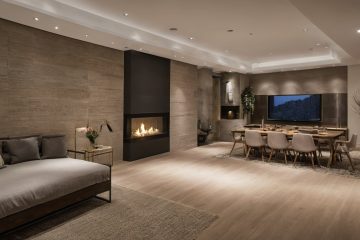
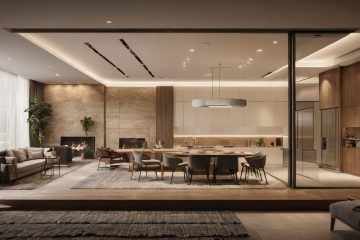
Approving villa renderings before the brief is signed can turn an attractive image into a costly problem: the majlis may ignore privacy, ceilings may hide AC conflicts, and the budget may drift before pricing.
What should a Riyadh villa design brief decide before any interior renderings?
A Riyadh villa design brief should decide lifestyle priorities, room scope, privacy rules, budget ceiling, site constraints, and approval steps before photorealistic visuals are commissioned. This applies to a new shell, renovation, extension, annex, or furnished upgrade.
The Riyadh villa owner should brief decisions, not just style preferences
In practical riyadh interior design work, the brief guides concept design, schematic design, design development, tender drawings, and fit-out supervision. Style images help, but “modern luxury” does not explain guest flow, children’s routines, staff access, storage, prayer, dining, cleaning, or daily family life.
- Risk: a majlis image ignores guest numbers, serving routes, or entrance sightlines.
- Risk: bedrooms look complete but lack wardrobes, study space, or future flexibility.
- Risk: old AC points, sockets, and lighting clash with the new layout.
A good villa brief should separate fixed constraints from flexible preferences
Fixed constraints include room functions, privacy, structural columns, ceiling heights, windows, plumbing, kitchen exhaust, and approval rules. Flexible preferences include colors, accessories, loose furniture brands, and value-engineered alternatives.
Which rooms and privacy zones should a Riyadh villa owner document first?
A Riyadh villa owner should document formal guest areas, family zones, bedrooms, kitchens, service rooms, staff spaces, terraces, annexes, and circulation before choosing finishes. The room list controls privacy, hospitality flow, storage, maintenance, and comfort during Riyadh’s hot months.
The majlis brief should define guest volume, gender use, serving routes, and formality
The majlis brief should state whether the villa needs a male majlis, female majlis, family hospitality room, formal dining room, guest washrooms, shoe storage, and a separate entrance. A guest route that looks into the family living room or kitchen creates a privacy problem even if the rendering is beautiful.
The family and service zone brief should define routines, storage, staff access, and maintenance
The family brief should cover TV habits, children’s play, study corners, bedrooms, wardrobes, linen storage, appliances, cleaning equipment, main kitchen, back kitchen, pantry, laundry, maid’s room, driver’s room, storage, terraces, and annex spaces. In high-use zones with stone floors or counters, maintenance should be discussed early because the Natural Stone Institute warns that scouring powders or abrasive creams can scratch natural stone surfaces.
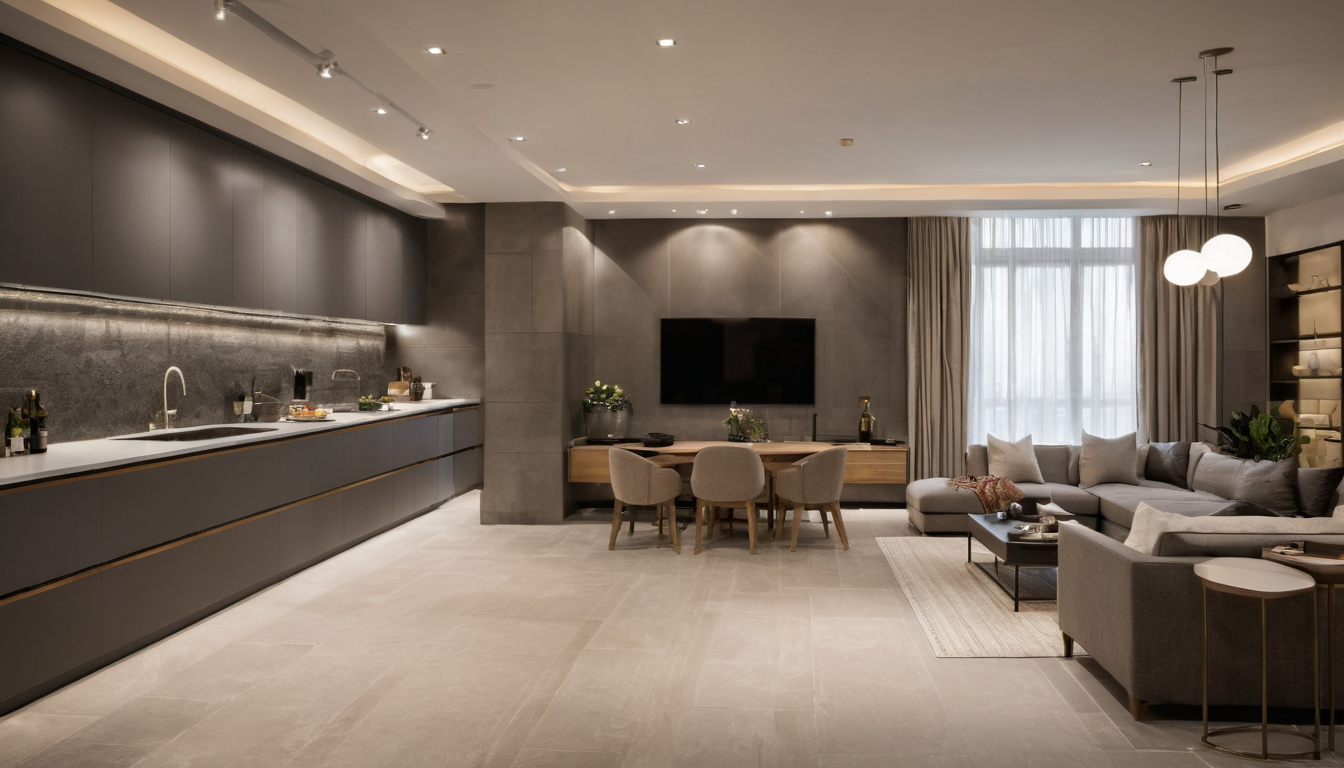
Which rooms and privacy zones should a Riyadh villa owner document first shown with floor, wall, and fixture relationships visible.
What scope should an interior designer in Riyadh price before concept approval?
An interior designer in Riyadh should price a separated scope that states whether the commission is concept-only, a full design package, design-and-build, or design with supervision. Visuals alone rarely give a contractor enough information to price accurately.
The villa design scope should list deliverables by stage, not only by room
A clear proposal should name layouts, mood boards, 3D renderings, finish schedules, reflected ceiling plans, lighting layouts, joinery details, furniture schedules, tender support, revision rounds, and site visits. The owner should know which deliverables appear at each stage.
The villa owner should confirm who is responsible for MEP, structure, and site checks
Interior decisions can affect AC diffusers, lighting circuits, plumbing points, smart wiring, suspended ceilings, stone cladding, and chandelier supports. Heavy decorative features need early review, especially heavy chandelier and gypsum ceiling coordination.
How should a Riyadh villa owner set the interior budget before renderings?
A Riyadh villa owner should set the budget by separating design fees, civil fit-out, gypsum, lighting, joinery, stone, flooring, loose furniture, curtains, appliances, smart systems, contingency, and imported-item risk. One blended figure hides the rooms and materials that drive cost.
The villa budget should separate fixed construction costs from movable furnishings
Fixed works include ceilings, flooring, wall cladding, doors, wardrobes, vanity joinery, kitchens, lighting infrastructure, switches, and AC coordination. Movable furnishings include sofas, beds, tables, rugs, artwork, accessories, and lamps. Using the furniture allowance to hide underpriced joinery or stone creates trouble once site work starts.
The design brief should identify premium rooms and budget risks
Many Riyadh villas work better with priority-room budgeting: spend more on the entrance, majlis, dining, master suite, and main family living, then simplify secondary bedrooms, corridors, storage, laundry, and staff areas. Finish hierarchy should include interior paint finish decisions, since washable walls in children’s rooms can matter more than decorative panels in low-use spaces.
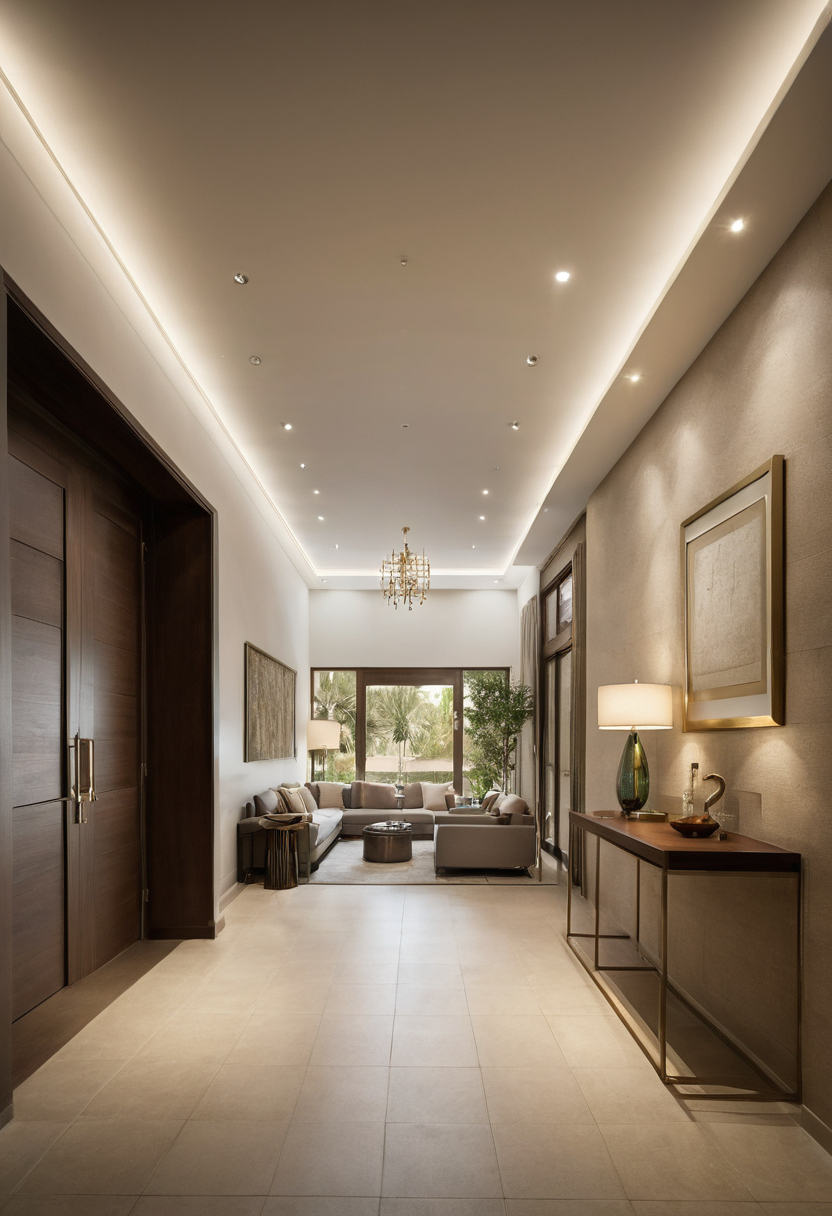
How should a Riyadh villa owner set the interior budget before renderings shown as an editorial reference for proportion and finish coordination.
The budget should name allowances for marble or porcelain, sanitaryware, decorative lighting, curtains, kitchens, smart systems, and custom joinery, plus exclusions such as MEP redesign, structural checks, authority work, and extra site visits. For qualified LED lighting, ENERGY STAR states that it uses at least 75 percent less energy and lasts up to 25 times longer than incandescent lighting. Wet zones also need protection: the U.S. Environmental Protection Agency says condensation and damp spots should be fixed promptly to prevent mold growth.
Which Riyadh site and climate decisions affect villa interior design?
Riyadh site and climate decisions affect interior design through solar heat gain, dust, glazing orientation, daylight, shading, AC distribution, material maintenance, and indoor-outdoor thresholds. These checks matter in villas with large windows, roof terraces, double-height halls, stone finishes, or heavily used family rooms.
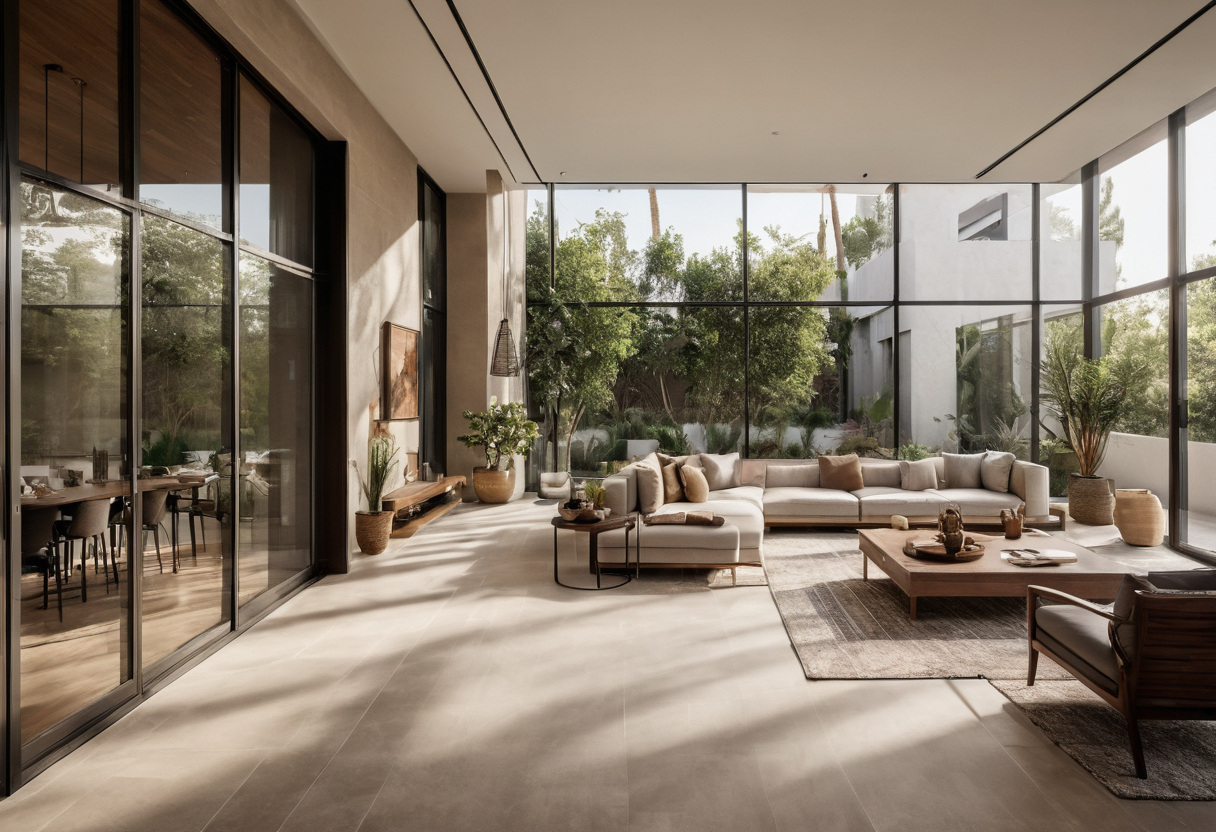
Which Riyadh site and climate decisions affect villa interior design shown with finish, fixture, and clearance relationships visible.
The villa survey should record orientation, glazing, shading, and daylight problems
The survey should mark east, west, and south-facing rooms, window sizes, glazing type, external shading, glare points, and rooms used during afternoon heat. A bright family living rendering can become uncomfortable if unshaded glass and polished floors are approved before site conditions are checked.
The material, ceiling, and lighting brief should account for maintenance and coordination
The material brief should test finishes against dust, UV exposure, cleaning frequency, and entrance use. The U.S. Environmental Protection Agency identifies paints, varnishes, waxes, cleaning products, building materials, and furnishings as common indoor sources of volatile organic compounds, and recommends increased ventilation when products that emit them are used indoors.
The ceiling brief should fix diffuser positions, cove lighting, speakers, sensors, access panels, curtain pockets, and chandelier supports before the 3D ceiling image is approved. These checks reveal which interior design companies in riyadh can manage coordination, not only presentation.
How should a villa owner compare interior design companies in Riyadh?
A villa owner should compare interior design companies in Riyadh by asking for comparable scope, named deliverables, revision limits, site-visit frequency, procurement responsibility, technical drawing depth, contractor coordination role, and relevant villa experience.
The proposal comparison should test deliverables, revisions, and site responsibility
Riyadh proposals may come from an independent designer, design studio, design-and-build firm, or fit-out contractor. Compare each offer against the same checklist: layouts, 3D views, finish schedules, ceiling and lighting drawings, joinery details, furniture schedules, tender help, revision rounds, approval milestones, site visits, and exclusions for MEP, structure, procurement, or authority coordination.
The portfolio review should look for similar villas, not just attractive renderings
A useful portfolio shows comparable majlis scale, family areas, kitchens, bedrooms, bathrooms, service circulation, and material level. The owner should ask whether each image was designed, built, supervised, or only rendered, then request drawing samples, site photos, references, and procurement schedules.
What approval workflow keeps Riyadh villa renderings buildable and controlled?
A Riyadh villa approval workflow should move from brief sign-off to measured survey, concept direction, budget check, material selection, technical drawings, contractor pricing, procurement planning, mockups, and site coordination. This sequence keeps visuals tied to cost, lead time, structure, services, and family use.
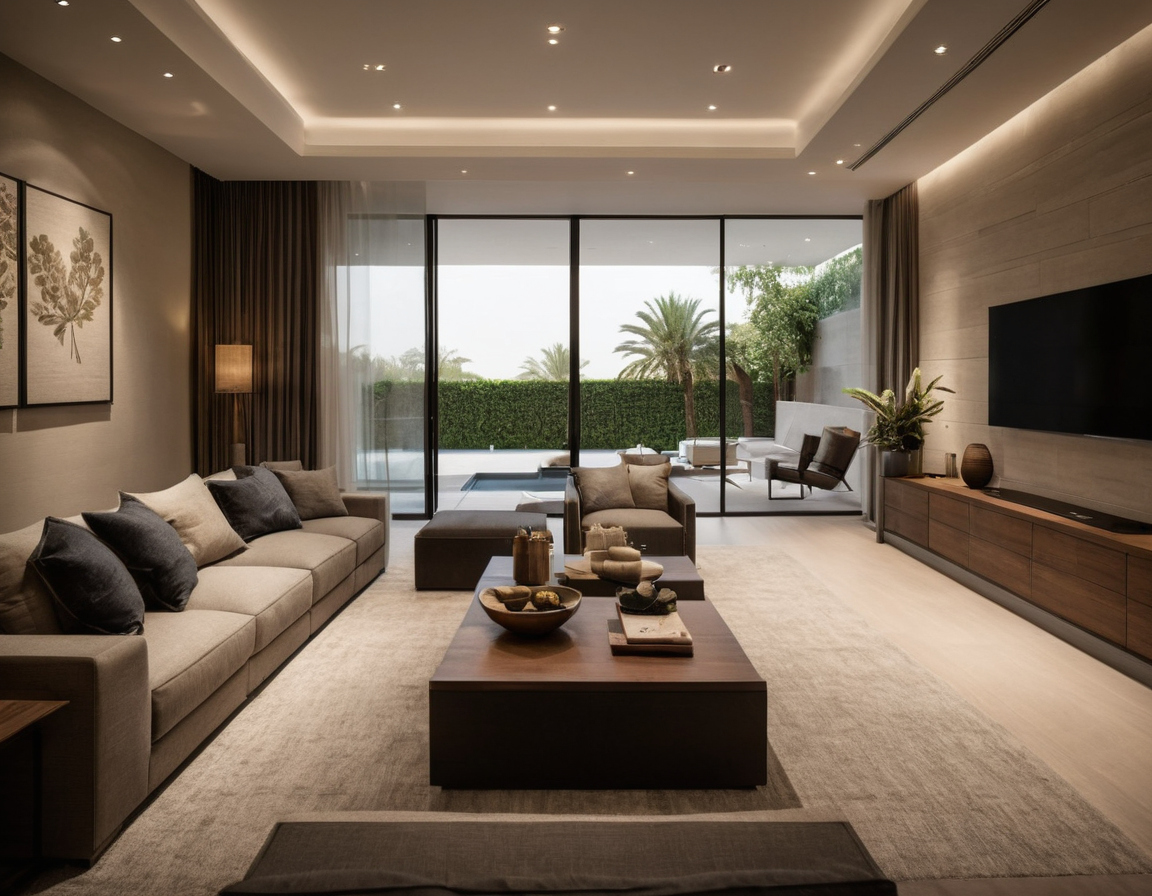
What approval workflow keeps Riyadh villa renderings buildable and controlled shown with floor, wall, and fixture relationships visible.
The villa owner should approve layouts and budgets before photorealistic 3D images
Photorealistic renderings should confirm decisions, not create them. If the family approves a double-height chandelier, marble wall, concealed AC slot, or imported sofa before layout and budget checks, the image can become expensive fiction.
- Brief approval: family needs, privacy rules, majlis use, service circulation, and budget ceiling.
- Survey approval: walls, ceiling heights, openings, columns, AC points, electrical points, and site limits.
- Layout approval: furniture sizes, circulation, doors, sightlines, storage, and wet-area changes.
- Budget approval: construction items, joinery, lighting, stone, curtains, loose furniture, and exclusions.
- Rendering approval: only after the design direction can be priced and technically drawn.