Why might the lowest Riyadh villa quotation not be the cheapest bid to complete? Missing rooms, reduced specifications, provisional allowances, excluded installation work and different VAT bases can turn an attractive tender into variations, delays or downgraded finishes after award.
Riyadh villa fit-out bids are comparable only when every contractor prices the same tender basis
Riyadh villa owners can compare bids only when every contractor prices the same drawings, quantities, quality level, programme and commercial terms.
What must be frozen before fit out companies in Riyadh submit prices?
Owners should define the Riyadh villa scope and budget before tendering, then have the tender package checked by the architect, designer, quantity surveyor or project manager.
| Control | Common tender basis |
|---|---|
| Documents | Drawing numbers, revisions and dates; room data; finish schedules; joinery details; MEP information; quantities |
| Included scope | Floors, family areas, majlis spaces, kitchens, wardrobes, lighting, controls, furniture and external work |
| Project condition | New build, shell, refurbishment or occupied villa, including demolition, protection and access |
| Commercial basis | Programme, clarifications, bidder acknowledgments, qualifications and VAT treatment |
Finish requirements should include indoor-air and moisture considerations where relevant. The U.S. Environmental Protection Agency identifies paints, varnishes, building materials and furnishings as possible indoor VOC sources and recommends increased ventilation during use of emitting products.
How should Riyadh villa owners control tender clarifications and revisions?
Use one query register and issue identical answers to every bidder. Each addendum should state its date, affected documents, pricing consequence and bidder acknowledgment. Flag quotations based on obsolete revisions, and record incomplete design information as a qualification rather than hiding it inside the comparison. The next step is to retain each submitted price while calculating a separate normalized total.
A bid-leveling matrix should preserve submitted prices and calculate separate normalized totals
A bid-leveling matrix converts quotations to common quantities, rates, allowances, taxes and scope assumptions without rewriting the contractors’ original offers.
How should quantities and unit rates be reconciled across Riyadh fit-out quotations?
- Lock the submitted total. Record the quotation date, revision, validity period and stated VAT basis.
- Adopt a control quantity. Use the consultant’s bill of quantities or an independently checked take-off for ceilings, flooring, wall finishes, doors, joinery, sanitary fixtures, lighting and MEP changes.
- Reconcile each discrepancy. Compare the bidder’s quantity, unit and rate with the control quantity without inventing an internal breakdown for unexplained lump sums.
- Record an evaluation adjustment. Support every addition or deduction with a drawing, schedule, bill item, estimate or written clarification.
- Calculate a separate normalized total. Keep the adjustment provisional until the contractor confirms it during commercial reconciliation.
Where the project quantity surveyor selects it, RICS NRM 2 provides detailed measurement rules for building work. The RICS framework does not automatically govern a private Saudi villa contract. RICS identifies NRM 2 within its three-volume suite and provides supporting spreadsheets, but project teams must still check customized formulas and measurement logic.
How should VAT, discounts, and arithmetic corrections appear in the comparison?
- Keep the original tender sum unchanged.
- Separate arithmetic, scope, specification and provisional-sum adjustments.
- Distinguish unconditional discounts from discounts tied to advance payment, award timing or combined packages.
- Place every bidder on the same VAT-inclusive or VAT-exclusive basis after checking the quotation wording and current Saudi tax guidance.
- Use Saudi riyals and one rounding convention throughout.
Which work packages should remain separate in a villa fit-out comparison?
Keep preliminaries, demolition, partitions, ceilings, flooring, paint, doors, joinery, kitchens, sanitary work, lighting, electrical work, HVAC modifications, controls, specialist supports, testing, cleaning and handover visible. Identify owner purchases and nominated suppliers separately. Package visibility reveals the next problem: bidders may name similar products while pricing materially different assemblies.
Quality normalization must compare complete assemblies rather than brand names alone
Quality normalization compares the substrate, finish, accessories, installation, testing and warranty behind each product name.
How should villa joinery and kitchen quotations be normalized?
- Define the core: board or timber type, grade, thickness, moisture suitability, veneer or laminate, edge treatment, backing and internal finish.
- Identify the hardware: manufacturer, product series, hinge or runner type, load rating, corrosion suitability and warranty. “Soft close” is not a complete specification.
- Price every interface: stone, metal, glass, lighting, appliances, service penetrations, installation tolerances and finish samples.
- Confirm production: bidder workshop, local subcontractor or imported fabrication, including replacement lead times and defect correction.
An alternative that reduces board thickness, hardware grade, finish coats or warranty is a downgrade, not equivalent value engineering.
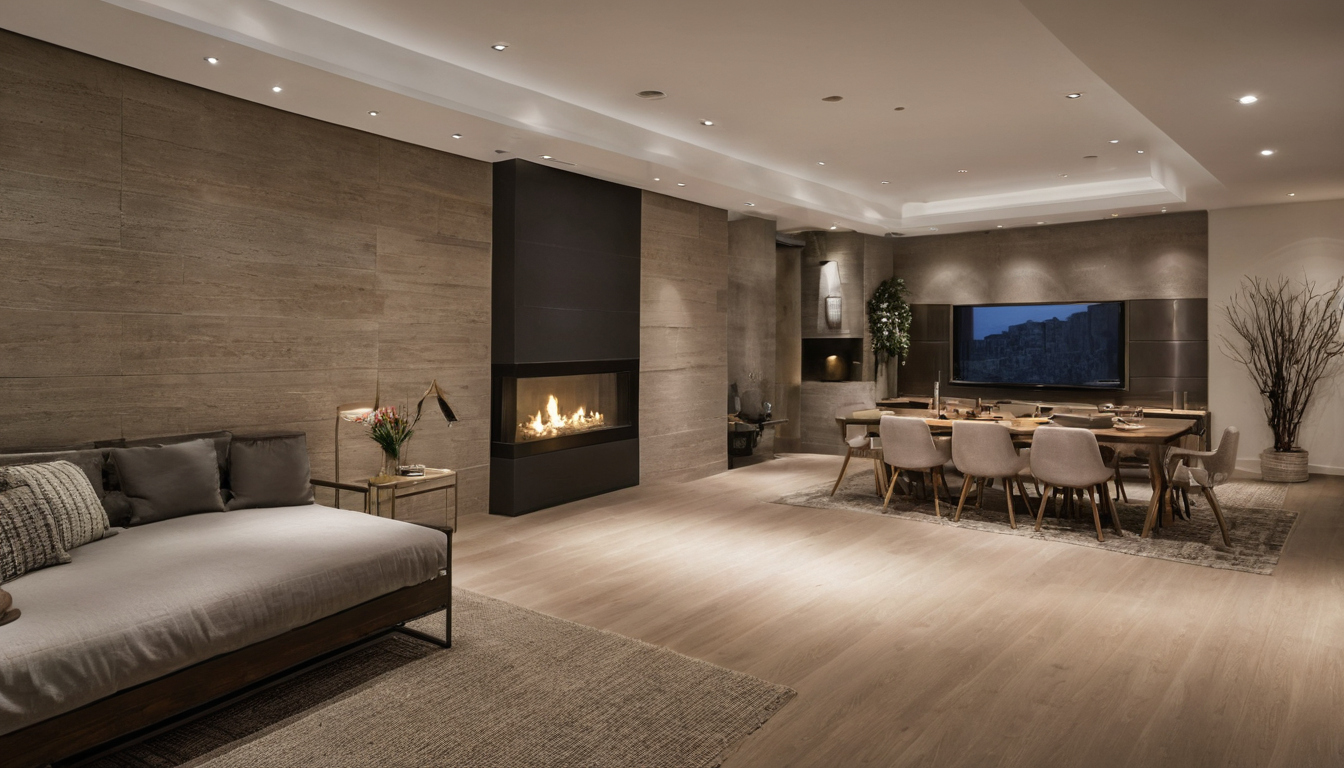
Quality normalization must compare complete assemblies rather than brand names alone shown with floor, wall, and fixture relationships visible.
How should flooring, stone, paint, and wet-area specifications be compared?
- Compare dimensions, thickness, finish, batch control, wastage, substrate preparation, adhesives, grout, movement joints, sealing and protection.
- Check maintenance against the intended room. The Natural Stone Institute recommends neutral cleaners for natural stone and warns that abrasive powders or creams can scratch it. Maintenance therefore affects suitability for busy entrances, majlis floors and kitchen counters.
- Define the paint system, primer, coat count, colour, sheen, surface preparation, washability evidence and warranty.
- Define waterproofing products, upstands, penetrations, inspections, flood testing and finish compatibility.
How should MEP and decorative feature allowances be quality-checked?
List luminaires, drivers, colour temperature, dimming, controls, access, testing and warranties. Include HVAC grille coordination, thermostat relocation, condensate work, balancing and maintenance access. Heavy features require engineering, access and supports, including structural coordination for heavy crystal chandeliers. Approve technical submittals, samples and benchmark mock-ups before accepting visually sensitive work. Complete assemblies can still appear inexpensive if allowances and exclusions remain unresolved.
Provisional sums, exclusions, and owner-supplied items can conceal the true villa completion cost
Provisional sums and exclusions are unresolved cost risks, not savings. Replace allowances with firm prices when quantities, specifications and installation requirements are sufficiently defined.

Provisional sums, exclusions, and owner-supplied items can conceal the true villa completion cost shown with finish, fixture, and clearance relationships visible.
When should a Riyadh villa provisional sum be replaced with a firm price?
Replace a provisional sum when the contractor can price a complete scope for stone, sanitary fixtures, appliances, decorative lighting, specialist metalwork or controls. Require the quantity, supplier basis, unit price, labour, wastage, delivery, testing, attendance, overhead, programme effect and VAT treatment.
| Entry | Normalization treatment |
|---|---|
| Provisional sum | Test low, expected and high outcomes; replace when scope becomes defined |
| Supply allowance | Add installation, delivery, waste and contractor attendance where omitted |
| Alternate | Keep outside the base total until the owner selects it |
| Contingency | Identify the risk covered and prevent duplication elsewhere |
| Owner supply | Allocate procurement, storage, damage, installation and warranty duties |
| Completion exclusion | Add a documented estimate consistently across affected bids |
Which exclusions usually require an owner-cost or risk adjustment?
Review temporary services, protection, access equipment, samples, mock-ups, specialist testing, commissioning, making good, waste removal, final cleaning and as-built records. Label consultant estimates as estimates rather than contractor prices. Once hidden costs are visible, site logistics and programme assumptions must also be equalized.
Riyadh site conditions and programme assumptions must be priced on a common basis
Fit-out prices are comparable only when bidders assume the same access, storage, temporary services, protection, interfaces and completion date.
How should programme differences between fit-out bidders be evaluated?
Issue one baseline programme covering mobilization, information releases, procurement, mock-up approvals, sectional completion, testing, snagging and handover. Require activity logic, critical-path assumptions, labour levels and float. Imported or long-lead materials need procurement evidence. Price acceleration, phased handover and extended preliminaries separately.
Which Riyadh villa logistics assumptions can change the fit-out price?
| Diagnostic | Common basis |
|---|---|
| Access and occupancy | Working hours, occupied areas, neighbours, loading, parking, stairs, lifts, noisy work and storage |
| Temporary provisions | Electricity, water, cooling, security, welfare, waste, dust control and protection |
| Interfaces | Coordination with base-build contractors, consultants, owner vendors and specialists |
Equalized logistics improve the price comparison, but they do not prove that the contractor can deliver it.
Contractor capability must be evaluated separately from the normalized fit-out price
A normalized price is not an award recommendation until the villa owner verifies the contractor’s delivery capability.
What evidence should interior fit out companies in Riyadh submit before award?
Request comparable-project records, references, an organization chart, staff CVs, current workload, workshop capacity, specialist subcontractors, quality and safety plans, financial records, warranty arrangements, insurance and project-relevant Saudi compliance documents.
How should a villa owner inspect a contractor’s workshop and completed projects?
Inspect material storage, machinery, finishing areas, dust control, sample records, packaging and production capacity. At completed villas, check alignment, joints, colour consistency, hardware, access panels, sealants, defects and ageing. Obtain permission and follow the homeowner’s privacy protocol before entering or photographing an occupied villa.
When should a low-priced Riyadh fit-out bidder be rejected or clarified?
Clarify omissions, abnormal package rates, unpriced qualifications, excessive allowances, compressed programmes and missing personnel. Allow the bidder to explain productivity, procurement and scope assumptions in writing. A materially noncompliant offer should pass through the owner-approved review process before rejection. The remaining bids can then move into a worked price-and-risk comparison.

Contractor capability must be evaluated separately from the normalized fit-out price shown with floor, wall, and fixture relationships visible.
A worked comparison should show how price adjustments and risk scoring change the award decision
A worked comparison places submitted totals, normalized totals, technical scores and uncertainty ranges side by side. The lowest submitted quotation may no longer be the strongest offer after reconciliation.

A worked comparison should show how price adjustments and risk scoring change the award decision shown with floor, wall, and fixture relationships visible.
What columns belong in a worked Riyadh fit-out bid comparison?
This hypothetical example uses SAR millions excluding VAT and is not a Riyadh market benchmark.
| Bid | Submitted | Arithmetic | Scope | Specification | Allowances | Normalized | Risk range | Technical |
|---|---|---|---|---|---|---|---|---|
| A | 4.20 | +0.02 | +0.24 | +0.12 | +0.07 | 4.65 | 4.58 to 4.78 | 68/100 |
| B | 4.45 | 0 | +0.08 | 0 | +0.05 | 4.58 | 4.54 to 4.66 | 84/100 |
| C | 4.70 | 0 | 0 | 0 | 0 | 4.70 | 4.70 to 4.74 | 88/100 |
How should price, quality, programme, and contractor risk be weighted?
Set owner-approved weightings before scoring normalized price, compliance, workmanship, programme, team, financial capacity, safety and aftercare. Test modest weighting changes, but never revise the criteria merely to favour a preferred bidder.
What must be confirmed before appointing the selected fit-out contractor?
Obtain a signed clarification schedule, final sum analysis and confirmation of drawings, alternates, exclusions, programme, payments, warranties and handover duties. Then incorporate drawings, schedules, and site duties into the contract. The defensible choice is the contractor offering the strongest reconciled combination of completion cost, specified quality and delivery confidence, not simply the lowest first-page total.
Frequently asked questions
How many fit out companies in Riyadh should a villa owner invite to tender?
Invite enough qualified contractors to create competition without overwhelming the review process. Three to five compliant bidders is often manageable, provided each contractor has relevant villa experience and receives the same tender information.
Should VAT be included when comparing interior fit-out quotations in Saudi Arabia?
Every comparison should use one VAT basis. Record whether each quotation includes or excludes VAT, verify the treatment applicable at the tender date and show tax separately from scope adjustments.
What is the difference between a submitted tender price and a normalized tender price?
The submitted price is the contractor’s unchanged offer. The normalized price is an evaluation total adjusted for comparable quantities, specifications, allowances, exclusions and commercial assumptions. It does not become the contract sum until the contractor confirms the reconciliation.
How can a villa owner identify specification downgrades hidden in a low fit-out bid?
Compare complete assemblies and request a departures schedule. Reduced substrate thickness, generic hardware descriptions, fewer finish coats, missing supports, limited testing and shorter warranties commonly indicate that the bidder priced a different quality level.
When is a provisional sum acceptable, and when should the contractor provide a firm price?
A provisional sum is acceptable while essential design, quantity or supplier information remains unresolved. The contractor should provide a firm price once the quantity, product, installation, attendance and programme requirements can be defined.