An elegant villa rendering may secure the interview, but a binding joinery door, a wandering stone joint, or mismatched majlis modules should determine the appointment. A traceable installation and a controlled physical mock-up offer stronger evidence than even the best portfolio.
Riyadh villa owners should apply a workmanship gate before appointing an interior design company
Appointment should depend on four checks: traceable completed references, inspection of installed details, approved physical samples, and written acceptance criteria matched to the proposed materials, workshops, and fit-out scope. Fit-out scope means the defined interior works that the appointed parties must design, coordinate, fabricate, install, inspect, and hand over.
Which workmanship evidence should a Riyadh interior design company provide before appointment?
- Traceable references: request comparable completed villas showing the company’s role, workshop, scope, and completion period. Client names and addresses may be redacted, but responsibility must remain identifiable.
- Production records: review selected shop drawings, material submissions, sample approvals, inspection records, snag lists, and close-out evidence. A snag is a recorded defect or incomplete item requiring correction.
- Inspection access: agree which completed installations and concealed details may be inspected and which documents can be reviewed under confidentiality arrangements.
- Delivery responsibility: record whether the company offers design only, design with site supervision, design and build, or full fit-out. Full fit-out requires coordination and delivery of the defined interior works, not merely the issue of drawings.
A responsibility matrix should identify whether the designer, main contractor, specialist workshop, or supplier produces and approves each finish. Use the findings to define the drawings, schedules, and site duties to put in scope.

Riyadh villa owners should apply a workmanship gate before appointing an interior design company shown as a planning reference for layout, scale, and material decisions.
The workmanship audit must match the Riyadh villa fit-out scope
The owner should first define the villa scope, budget, and site decisions before renderings. A room schedule should separate joinery, stone, upholstery, paint, decorative metal, imported systems, and Riyadh-made bespoke items. Prioritize testing for high-use, highly visible, wet-area, heat-exposed, and difficult-to-replace work.
For damp locations, the U.S. Environmental Protection Agency moisture guide advises correcting condensation and wet spots promptly to limit mold growth. Then establish attribution: did the shortlisted company actually fabricate, supervise, or install the work presented as evidence?
Traceable Riyadh project references must connect the designer to the installed work
A useful reference identifies the villa type, completion period, services performed, fabrication parties, and details available for inspection. The owner must distinguish the shortlisted company’s installed work from photographs supplied by contractors, workshops, manufacturers, or another design practice.
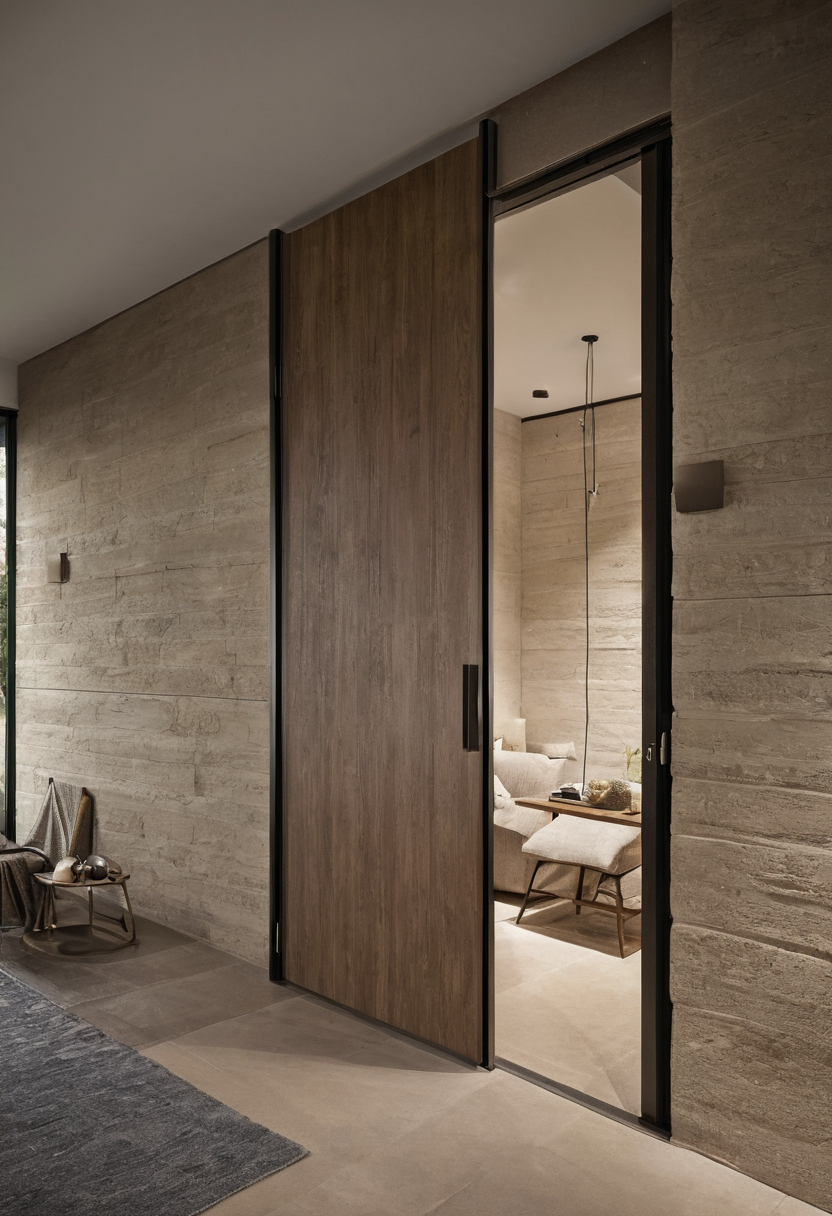
Traceable Riyadh project references must connect the designer to the installed work shown as a planning reference for layout, scale, and material decisions.
How can a villa owner verify the legal entity behind a Riyadh interior design portfolio?
Request a current commercial registration extract showing the entity’s Arabic and English legal names, registration number, status, registered activities, and contracting name. Verify the information through the current service published by the Saudi Ministry of Commerce or Saudi Business Center. If the offered scope includes engineering or another regulated professional service, request evidence for the registration or license claimed by each responsible person and confirm that it covers the proposed role.
How can completed villa references prove responsibility for workmanship?
Ask for two or three Riyadh villa references comparable in scope, material level, and complexity. Link the company to its actual duties through an appointment extract, identified shop drawings, finish schedules, approved samples, or inspection records. Record who designed, fabricated, supervised, inspected, and installed each major finish.
Client consent should govern calls and site visits. Anonymized snagging and handover records can still show whether defects were identified and corrected. Where past work included coating removal or other high-emission activities, inspect the associated product and ventilation records: the EPA reports that concentrations of many organic pollutants can be two to five times higher indoors than outdoors and may rise much further during and for several hours after activities such as paint stripping. This general guidance is not a Saudi exposure limit or a product-specific result.
Completed Riyadh villa details reveal workmanship that portfolio photographs conceal
A reference visit should examine junctions, alignment, movement, color consistency, operation, and repair quality under agreed conditions. The evidence matters only when the installation is attributable to the shortlisted company and remains comparable with the materials and construction proposed for the new villa.
Obtain the reference owner’s permission and agree on access limits, lighting, viewing distance, and permitted tools. Record installation age, maintenance, repairs, and replaced components. Photographs should use coded detail references and exclude occupants and identifying features unless the client expressly permits them.
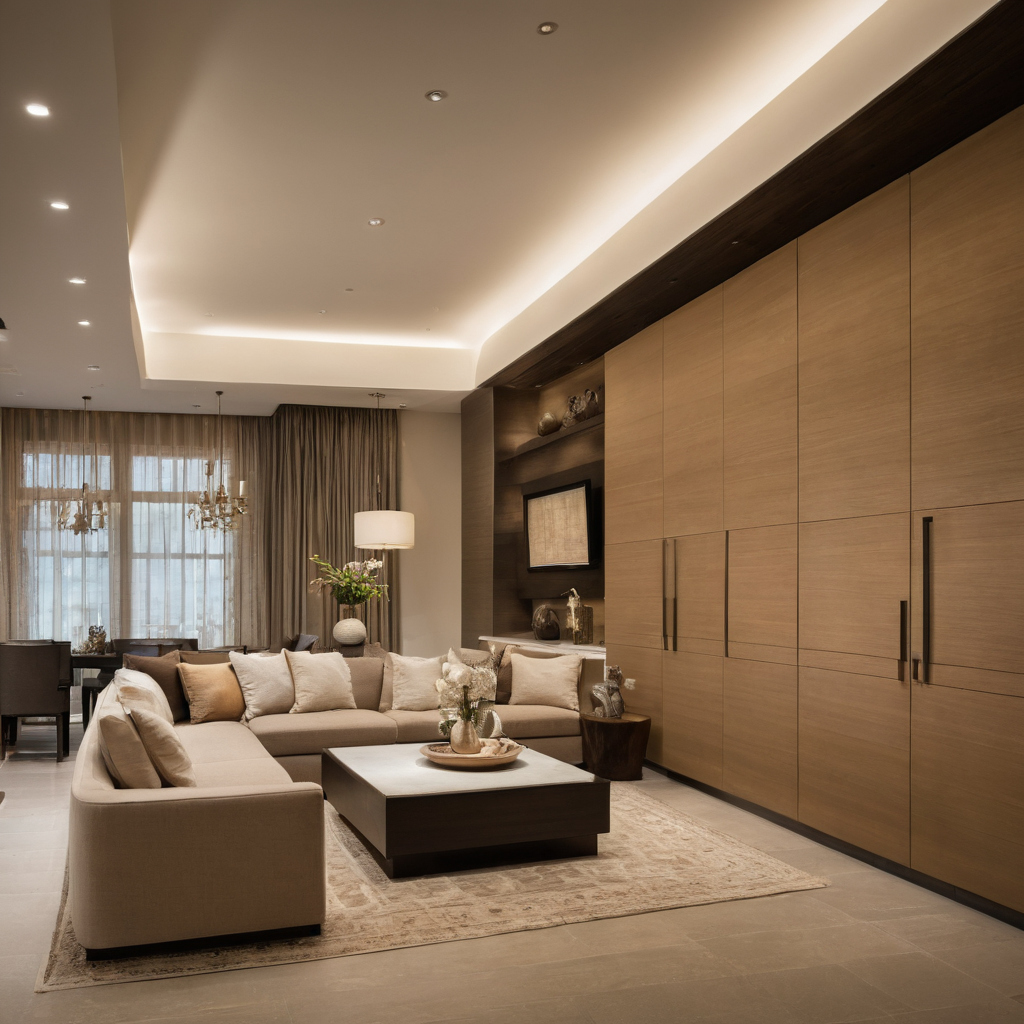
Completed Riyadh villa details reveal workmanship that portfolio photographs conceal shown as a planning reference for layout, scale, and material decisions.
Joinery inspection should test alignment, operation, edges, and concealed construction
Inspect wardrobes, doors, wall paneling, vanity units, shelving, and majlis storage. Compare dimensions and reveals with the approved shop drawings, then operate accessible hinges, runners, lifts, and handles repeatedly. Binding doors, inconsistent gaps, loose handles, and runners that stop short can reveal fabrication or adjustment failures hidden by a composed photograph.
Check veneer matching, laminate edges, lacquered corners, baseboards, sockets, and access panels. Use a removable panel or another non-destructive inspection point to review backing, ventilation, service clearances, and concealed fixings. Assess proprietary fittings against the manufacturer’s current instructions rather than an invented universal tolerance.
Stone inspection should test setting-out, joints, edges, support, and finish consistency
Trace stone floors, stairs, cladding, and vanity tops to the specified natural or engineered product, thickness, finish, and approved range sample. Review slab layout for abrupt color changes, wandering joints, awkward cuts, and unresolved corners. Examine lippage, joint width, edge polishing, miters, penetrations, repairs, and visible support against the project documents and supplier instructions.
Maintenance can alter the finish. The Natural Stone Institute advises that spills be blotted rather than wiped to avoid spreading the affected area, with later treatment selected for the stone and substance involved.
Upholstery and paint inspection should test repeated use and agreed appearance
A floor-seating module is one repeatable upholstered majlis seat unit. Each module should recover consistently after use, align with adjacent units, and maintain the agreed seams, piping, and fabric direction. Check frame stability, cushion density, removable components, and repaired stitching. The Association for Contract Textiles identifies separate voluntary tests for flammability, wet and dry crocking, lightfastness, physical properties, and abrasion. These benchmarks do not replace the exact specification or applicable Saudi project requirements.
View painted walls and lacquered joinery under the villa’s intended lighting, including grazing light only where it forms part of the agreed inspection condition. Check sheen, preparation, touch-ups, sanding marks, and color consistency. Paints, varnishes, and adhesives can emit volatile organic compounds, so current product data must govern ventilation and re-entry. The EPA also advises increased ventilation and compliance with label precautions.
Lighting quality also affects finish assessment. ENERGY STAR states that qualified LED lighting uses at least 75 percent less energy and lasts up to 25 times longer than incandescent lighting, where those qualified products are applicable. Energy performance, color quality, dimming, and the specified light source must still be evaluated separately. A reference visit diagnoses past work; a full-size mock-up tests whether the proposed workshop can repeat it.
A full-size mock-up tests whether the proposed Riyadh workshops can deliver the design
For bespoke villa work, a color chip cannot prove workmanship. Commission a representative panel, room corner, joinery bay, stone junction, or floor-seating module using the proposed workshop, materials, hardware, finish system, and installation sequence.
Which Riyadh villa details require a full-size mock-up rather than a sample chip?
A full-size mock-up is justified where acceptance depends on geometry, joints, operation, comfort, lighting, or coordination between trades. Priority details include:
- bespoke joinery with aligned reveals, concealed backing, integrated lighting, metal trims, and operating hardware;
- book-matched stone with visible joints, edge profiles, supports, sealers, and adjacent finishes;
- decorative paint or lacquer viewed under the proposed ambient and grazing light;
- a complete majlis floor-seating module with its frame, foam, fabric, seams, and finished height.
The workshop quotation should state the SAR price for design development, materials, fabrication, delivery, installation, revisions, and storage. It should also identify the current production period and imported-material dependencies rather than rely on an assumed lead time. For stone maintenance, the Natural Stone Institute generally recommends neutral cleaner, stone soap, or mild detergent and warm water, subject to supplier instructions and treatment compatibility.
The approved mock-up should become the workmanship control sample
Label the approved mock-up with its identification code, revision, date, material batches, workshop, and approving parties. A comment log should distinguish accepted features, rejected work, and permitted natural variation, meaning the agreed variation inherent in a material rather than a fabrication defect.
The retained control sample is the physical benchmark for bulk production. Record ownership, protected storage, photographs, approval authority, and what happens if production conflicts with the sample, drawings, supplier instructions, or a later material batch.
Measurable acceptance criteria should replace requests for a perfect finish
Workmanship becomes assessable when each item has a stated reference, inspection method, permitted variation, inspection stage, reviewer, and remedy. Numeric tolerances belong only where the product, substrate, installation method, calibrated tool, and measurement procedure are identified.
A finish acceptance schedule should state what is measured and when
| Item | Reference and characteristic | Method and stage | Reviewer and remedy |
|---|---|---|---|
| Joinery doors | Drawing and control sample; reveals and operation | Gauge and operation test at first-off, workshop, and installation | Designer; adjust, remake, or replace |
| Stone floor | Setting-out drawing; joints and slab sequence | Measure after dry layout and installation | Designer and stone specialist; reset affected work |
| Majlis modules | Approved sample; seams, alignment, and consistency | Visual and dimensional check before delivery | Designer; correct or remake |
| Paintwork | Approved panel; colour and sheen | Inspect cured surfaces under agreed lighting, distance, and angle | Designer; prepare and recoat |
A hold point stops work until the designated reviewer gives approval. The schedule must distinguish permitted natural variation, acceptable workmanship, a snag requiring correction, a defect, and a client-requested design change.
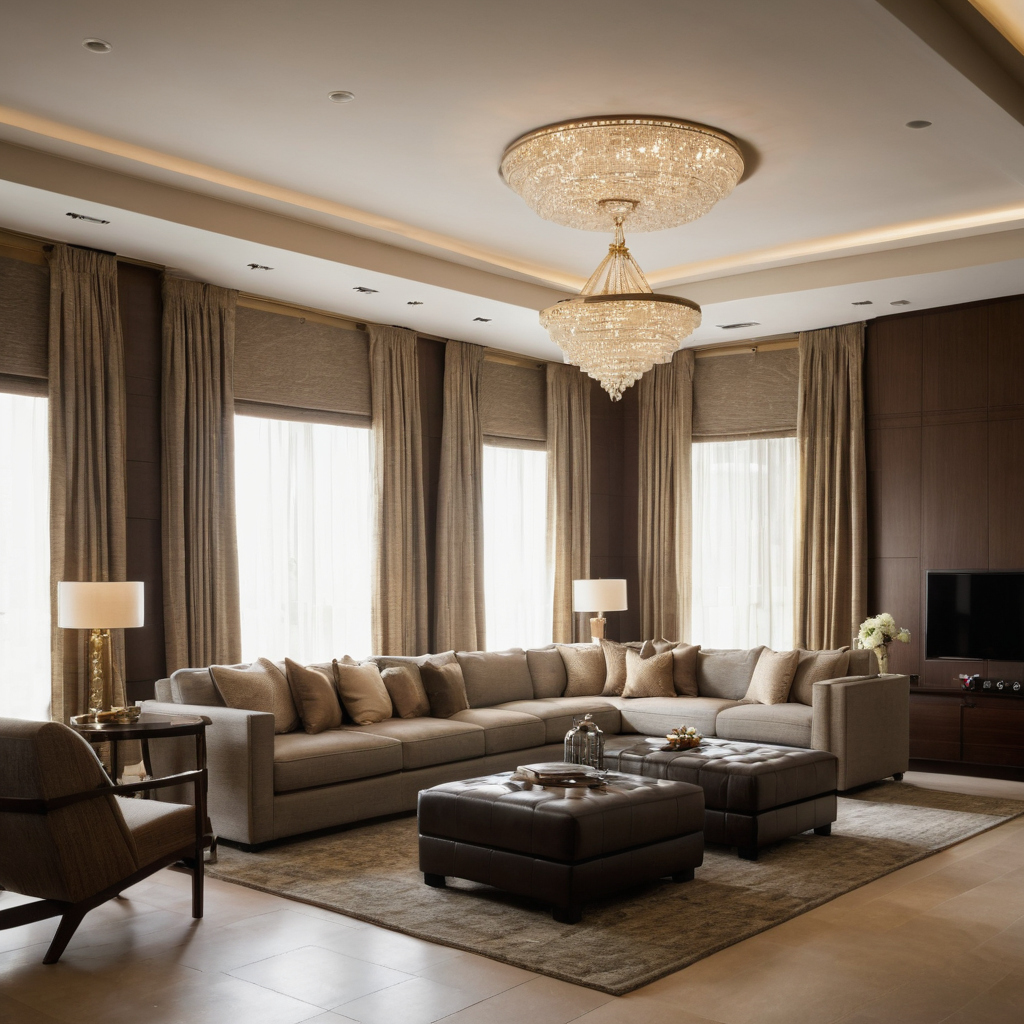
Measurable acceptance criteria should replace requests for a perfect finish shown as a planning reference for layout, scale, and material decisions.
Manufacturer requirements should govern proprietary hardware, coatings, and installation systems
Request current instructions for the exact hardware, coating, adhesive, sealer, fabric, foam, or proprietary system. Obtain written supplier clarification for unusual substrates or site conditions, including requirements for preparation, approved applicators, environmental limits, maintenance, warranties, and inspection records.
An ASTM D3359-23 tape test classifies coating removal after pressure-sensitive tape is applied to prescribed cuts. The result does not prove universal service life or resistance to every form of damage.
The appointment decision should combine workmanship evidence, capability, and unresolved risk
A Riyadh villa owner should appoint a company only when its evidence covers the actual fit-out scope and each unresolved risk has a named owner, corrective action, and deadline.
Which workmanship failures should stop or condition a Riyadh interior design appointment?
- Pass: traceable references, accepted mock-ups, current workshop-capacity statements, defined supervision, and documented correction responsibility support the proposed scope.
- Conditional pass: a missing record or failed sample is remediable. State the required revision, reviewer, retest method, and completion date before appointment or fabrication release.
- Hold: repeated defects, concealed substitutions, uncertain workshop identity, weak control of visible finishes, unsafe interfaces, obstructed replacement access, or refusal to accept correction responsibility indicate a capability or accountability failure.
Workmanship findings should feed into the contract scope and bid comparison
Append approved samples, mock-ups, acceptance schedules, hold points, workshop identities, response periods, and recorded exclusions to the appointment documents. Price mock-up production, inspection, storage, rejected work, replacement, and retesting on the same basis across shortlisted companies.
The final decision is not which rendering looks most persuasive. It is which company can prove, price, supervise, and correct the installed result. Owners should compare Riyadh fit-out bids on a consistent basis, then commission a workmanship review or sample plan before signing.
Frequently asked questions
The following answers summarize the appointment tests a villa owner can apply before releasing design or fit-out work.